

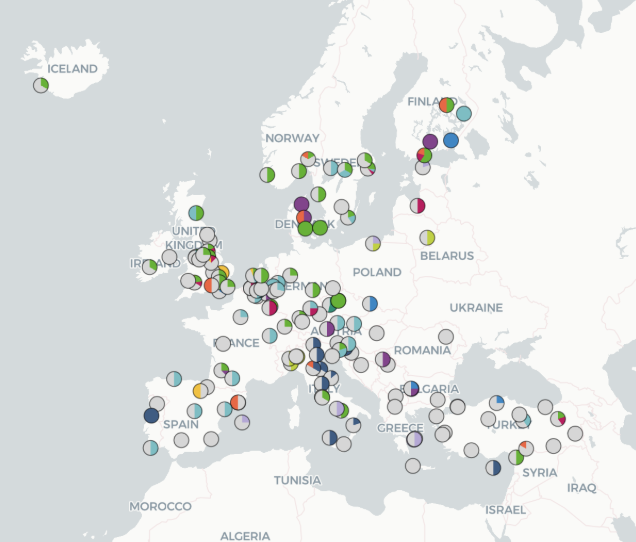

New data from 37 countries reveals the escalating threat of carbapenem-resistant K. pneumoniae and identifies “warning signals” for E. coli, prompting calls for global genomic surveillance.
A major international genomic surveillance project has revealed an escalating and “deteriorating” landscape of antibiotic resistance across Europe. The findings, published today in two new manuscripts, in The Lancet Microbe indicate that current public health interventions have been insufficient to curb the spread of some of the world’s most dangerous “superbugs”.
The research, known as the CCRE (Carbapenem- and/or Colistin-resistant Enterobacterales) survey, was initiated by the European Centre for Disease Prevention and Control (ECDC) and conducted in collaboration with The Centre for Genomic Pathogen Surveillance, Pandemic Sciences Institute, University of Oxford, the Public Health Agency of Sweden, and hundreds of national expert laboratories and hospitals.
The survey analyzed two critical species of bacteria—Klebsiella pneumoniae and Escherichia coli—that have developed resistance to carbapenems, a class of “last-line” antibiotics used when other treatments fail. Both are classified in the “Critical” category of the World Health Organization’s priority pathogens list.
A Growing Crisis
Comparing data from the 2019 CCRE survey to the previous “EuSCAPE” study (2013-14), the study found:
Failure of Containment: For K. pneumoniae, the situation has worsened significantly. High-risk lineages identified a decade ago continue to spread through European healthcare systems. More alarmingly, the bacteria are evolving; researchers detected new multidrug-resistant lineages and an increase in “hypervirulent” strains that can cause severe disease in otherwise healthy individuals.
Early Warning for E. coli: While carbapenem-resistant E. coli remains less common, the study detected “warning signals”. Though transmission within Europe appeared limited, the bacteria are being introduced repeatedly from outside the region. Experts warn that without urgent action, E. coli could become endemic, mirroring the crisis seen with K. pneumoniae.
Hospital Transmission: The data reinforces earlier findings that the spread of these pathogens is driven primarily within and between hospital networks, necessitating a radical rethink of hygiene and patient movement protocols.
Real-Time Intervention: Greece Case Study
The value of this scale of structured genomic surveillance was demonstrated even before publication. During the analysis of data, the study group identified a dangerous “high-risk” clone (ST39) spreading rapidly and identified among 12 of 15 sampled hospitals in Greece. This early detection triggered a rapid follow-up survey in 2022 in Greece, confirming the persistence of the clone and allowing for immediate public health intelligence sharing.
Dr Sophia David, Joint first author on both manuscripts, said: “Our results show that the epidemic of carbapenem-resistant bacteria in Europe is escalating despite repeated public health warnings. We are seeing a more diverse, more virulent, and more resistant population of pathogens than we did ten years ago. To stop this, we need more than just standard protocols; we need a coordinated, genomic-led ‘early warning system’ across all of Europe.”
A Call to action on a global scale
The researchers argue that the findings prove that current measures are not enough. The report calls for an urgent shift toward intensified infection prevention and control (IPC), stricter antimicrobial stewardship and strengthened continental and global genomic surveillance – moving from “snapshot” studies to regularly repeated structured surveys and integrated genomic monitoring for microbial risk.
Professor David Aanensen, joint senior author on both papers, said “These latest findings serve as a stark reminder that antimicrobial resistance requires constant monitoring to inform interventions. Surveillance is core – we cannot fight what we cannot see. The CCRE survey has cements that while national efforts are vital, they are no longer enough to stay ahead of these evolving superbugs. The only path forward is the transition from localized research snapshots to a truly global, structured surveillance network. We must move with urgency to embed genomic intelligence into routine public health systems across every continent’.
Towards implementation, the Collaborative for Actionable Surveillance of AMR (CASA) has been established.CASA is a collaboration between regional public health bodies and 52 founding countries. The organising committee includes ECDC, the AfricaCDC, PAHO, The International Vaccine Institute, The Fleming Initiative and The Centre for Genomic Pathogen Surveillance. For further information see : https://amrsurveillance.org
Links:
Lancet Microbe CCRE survey K. pneumoniae manuscript – https://www.thelancet.com/journals/lanmic/article/PIIS2666-5247(25)00248-4/fulltext
Lancet Microbe CCRE survey E. coli manuscript – https://www.thelancet.com/journals/lanmic/article/PIIS2666-5247(25)00249-6/fulltext
ECDC report – Results of the survey of carbapenem- and/or colistinresistant Enterobacterales, 2019
ECDC news item –Europe advances genomic surveillance of CCRE with landmark multi-country study
Interactive data:
Klebsiella: https://microreact.org/project/klebsiella-ccre-survey


